

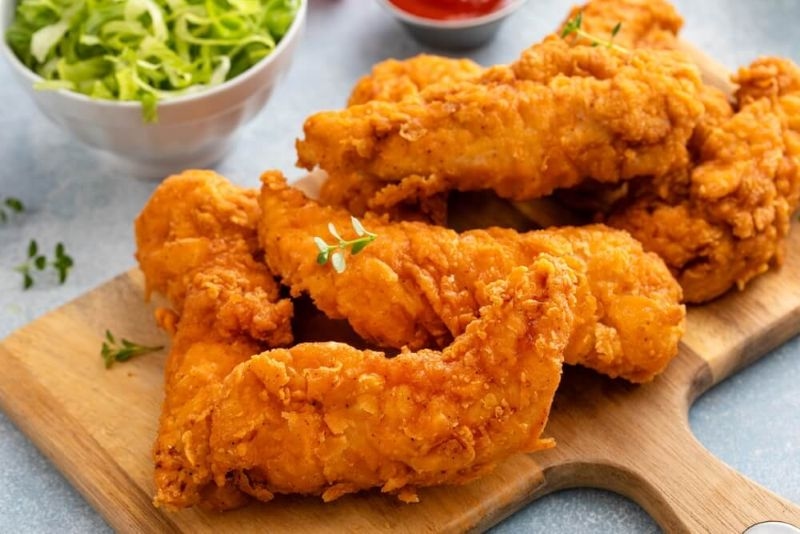
Most frozen chicken tenders are just overpriced bags of salty cardboard and processed filler. Nobody achieves a restaurant-style crunch by tossing frozen nuggets into a weak microwave. To execute a flawless chicken tenders recipe, you have to stop relying on pre-packaged garbage and master the art of the double-dredge.
This blog will help you understand the best steps to make a restaurant-style chicken tenders recipe.
Top Pick: Asian Chicken Recipe: Is This Apple Soy Glaze Worth the Hype?
Buying tenders at a restaurant is a massive financial rip-off when you can execute a superior version in your own kitchen for a fraction of the price. People are obsessed with homemade chicken tenders because it puts the power back in their hands, allowing them to kill the excessive sodium and hidden preservatives found in commercial kitchens.
When you control the oil and the breading, you aren't just eating food; you are optimizing a meal for maximum flavor and biological fuel. There is a psychological victory in biting into a strip of chicken that actually sounds like a crunch rather than a soggy, oil-soaked sponge.
Homemade versions allow for aggressive seasoning profiles that restaurants are too scared to try, letting you customize the heat and the spice to your exact preference every single time you cook.
The most essential ingredients needed for making a crispy chicken strips recipe at home are listed below:
Stop cutting up giant and woody chicken breasts. Use the actual tenderloin—the strip of meat underneath the breast. It is naturally more tender and cooks at a consistent speed.
Mixing cornstarch into your flour is non-negotiable. Flour provides the structure, but cornstarch creates that glass-like, crispy exterior that stays crunchy even after the chicken cools down.
This acts as the biological glue and the tenderizer. The lactic acid in buttermilk breaks down the tough proteins in the chicken while providing a sticky surface for the breading to grab onto.
Bland chicken is a failure. You need a heavy hand with smoked paprika, garlic powder, onion powder, and a hit of cayenne pepper. If you can’t see the spices in the flour, you didn’t use enough.
If you want that jagged and extra crispy restaurant look, you must use Japanese panko. These coarse crumbs provide more surface area for the oil to hit, resulting in a much louder crunch.
You can check the following steps to prepare the chicken tenders recipe at home:
Submerge your chicken tenderloins in a bowl of seasoned buttermilk for at least thirty minutes. This forces moisture into the meat and ensures it stays juicy under the high heat of the fryer. If the meat is dry, the recipe is a failure.
In a separate wide shallow bowl, whisk your flour, cornstarch, and the entire spice cabinet. Do not be shy. Every single inch of that flour needs to be loaded with seasoning so the flavor penetrates the crust.
Pull a tender from the buttermilk, let the excess drip, and bury it in the flour. Press down hard to force the flour into the meat. For a hardcore crunch, dip it back into the buttermilk and into the flour a second time. This creates a thick, craggy barrier.
This is where most people fail. Set the coated tenders on a wire rack for ten minutes before cooking. This allows the flour to hydrate and "glue" itself to the chicken. Skipping this means your breading will fall off in the pan.
Whether you are frying in oil or using an air fryer, you need high, consistent heat. Drop the tenders in and do not crowd the pan. Overcrowding drops the temperature and turns your "fried" chicken into "boiled" chicken.
Pull the chicken out when it hits a deep golden brown. Place it on a wire rack, not a paper towel. Paper towels trap steam and ruin the crunch you just worked so hard to build.
The air fryer has completely revolutionized the way people handle a chicken tenders’ recipe in 2026. It is the ultimate easy air fryer dinner idea because it removes the massive mess and the dangerous lingering smell of a deep fryer. Traditional frying requires a gallon of oil and a lot of cleanups, but the air fryer uses high-speed convection fans to circulate dry heat around the chicken. This mimics the frying process by rapidly evaporating the moisture on the surface of the breading, creating a legitimate crunchy chicken coating without the grease. You can have a full dinner on the table in under fifteen minutes with zero risk of an oil fire or a cluttered kitchen.
You can check the 3 healthy fried chicken alternative options in the following list:
This is the king of low-carb alternatives. The fat in the almonds and the cheese crisps up beautifully in the oven, providing a nutty, salty crunch that rivals any traditional breading.
Using unsweetened cornflakes creates a massive, jagged exterior. It gives you that extreme crunch sound while using a whole grain that handles high heat better than standard white breadcrumbs.
Grinding oats into a fine powder provides a massive dose of fiber. It creates a denser, heartier crust that feels much more filling than a standard flour-based coating.
Mastering a restaurant-level chicken tenders recipe requires abandoning lazy cooking habits and locking down the actual chemistry of a perfect crust. Taking control of the raw ingredients is the only way to dictate the exact flavor profile and completely eliminate cheap, toxic preservatives.
You can, but you have to thaw it completely and pat it dry with paper towels. If there is any ice or excess moisture on the meat, the breading will never stick, and you’ll end up with a soggy disaster.
You probably skipped the "rest" step. The flour needs time to bond with the buttermilk. If you go straight from the flour bowl to the fryer, the coating isn't "set" yet and will peel away the second it hits the oil.
For health and cleanup, yes. For absolute maximum crunch, deep frying still wins. However, a modern 2026 air fryer gets about 90% of the way there with 10% of the effort, making it the smarter choice for a daily routine.
This content was created by AI