

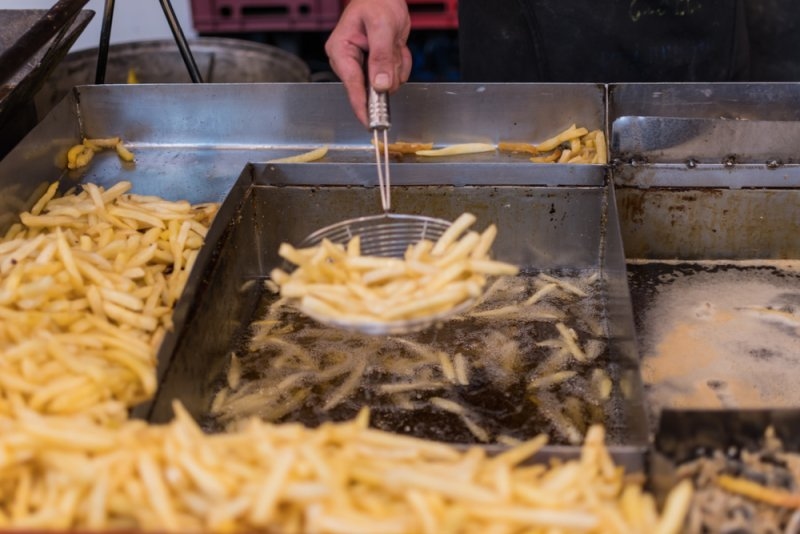
The details matter. Different foods need different heat. That perfect, crispy fried bite isn’t just about what kind of oil you use. The actual temperature of your oil decides how quickly the outside browns, how much oil soaks in, and whether the centre actually cooks. If the oil’s too cool, your food turns out greasy. If it’s too hot, the outside goes dark before the inside’s ready. So yeah, keeping the oil at the right temperature matters just as much as timing, coatings, and how big your food pieces are.
If you’re cooking with Presto, FryDaddy, Lodge, or Le Creuset at home, put the temperature at the top of your checklist—not just as a loose idea. Here, we break down how deep frying temperatures work, reliable ranges for different foods, and how to keep that oil steady.
The right deep-frying temperature changes with the food, coating, and cooking time, but a useful working range is usually 325°F to 375°F.
A common mistake is treating every recipe as if it needs the same deep fry temperature. Chicken, fries, doughnuts, and battered vegetables behave differently once they hit hot oil.
For many foods, 350°F is a practical starting point. Thicker chicken pieces may begin around 325°F to 350°F so the centre cooks before the coating becomes too dark. French fries often benefit from a two-stage process.
The deep frying temperature also drops immediately after food enters the oil. That matters more than many recipes admit.
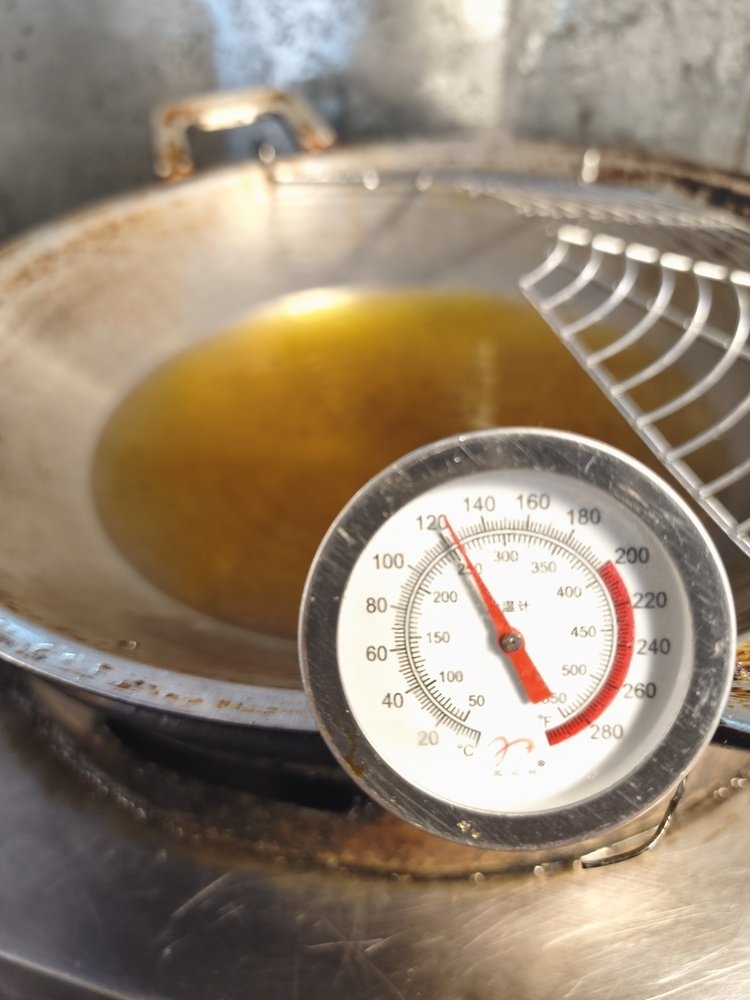
A thermometer gives a much clearer reading than watching bubbles. A clip-on thermometer, infrared thermometer, or digital probe can work, though infrared models need a clear surface reading and can be less useful for measuring the oil underneath.
For repeatable results, check the frying oil temperature before adding food, immediately afterwards, and during longer batches. A few degrees matter when frying.
Oil temperature for deep frying falls when cold or room-temperature food is added. Large batches cause a bigger drop. If you immediately add another batch, the oil may remain below the useful range.
Give the oil time to recover. With countertop fryers such as the Presto FryDaddy, the thermostat helps maintain heat, but the same basic rule applies: do not overload the basket.
Don't Miss: Peanut Oil vs Vegetable Oil: Which One Fits Your Kitchen?
A deep frying temperature chart is useful because it shows the practical differences between foods rather than forcing everything into one number.
| Food | Approx. temperature | Typical result |
|---|---|---|
| French fries, first fry | 325°F–350°F | Soft centre, light exterior |
| French fries, final fry | 350°F–375°F | Crisp and browned |
| Chicken wings | 350°F–375°F | Crisp skin, cooked centre |
| Breaded chicken | 325°F–350°F | Even browning |
| Doughnuts | 350°F–375°F | Golden outside, tender centre |
| Onion rings | 350°F–375°F | Crisp coating |
| Fish fillets | 350°F–375°F | Firm centre, crisp crust |
| Tempura vegetables | 340°F–360°F | Light, delicate coating |
This deep frying temperature chart is a starting point, not a replacement for checking the food itself. Thickness changes cooking time. Frozen food changes the heat response too.
A useful deep frying temperature guide is to keep the oil within roughly 10°F to 15°F of the recipe's target whenever possible.
If the recipe says 350°F, adding a large batch that drops the oil to 310°F means the food will cook differently. The coating can absorb more oil before it firms up.
With a deep frying temperature guide, the goal is not perfect laboratory precision. It is avoiding large swings.
What temperature should oil be for deep frying? For many everyday foods, 350°F is a strong starting point, while 325°F to 375°F covers a large part of home frying.
Still, follow the recipe when it gives a specific target. A thin fish fillet and a thick chicken thigh should not be treated identically.
The best temperature for deep frying is determined by the food's size, moisture, and coating. There is no single universal number.
What temperature to deep fry chicken depends heavily on the cut. Smaller wings can tolerate around 350°F to 375°F, while thicker pieces are often better started around 325°F to 350°F.
The coating should brown without becoming too dark before the meat reaches a safe internal temperature. A food thermometer is essential here; oil temperature alone does not confirm that chicken is fully cooked.
How hot should oil be for deep frying? For many coated foods, aim around 350°F. For lighter or delicate foods, a slightly lower range can work better.
Do not chase an exact number every second. Watch the recovery after adding food. If the oil stays unusually low, smaller batches will usually fix the problem.
The ideal oil temperature for deep frying is usually the point where the food cooks steadily while the exterior develops colour at a reasonable rate.
For example, 375°F can quickly crisp thin onion rings but may brown a thick breaded item too aggressively. Around 350°F offers a useful middle ground for many foods.
Suggested Reading: How to Dispose of Cooking Oil Safely Without Clogging Drains?
Equipment changes how easily temperature can be controlled. The cooking principle stays the same, though.
| Method | Temperature control | Best use |
|---|---|---|
| Countertop fryer | High | Frequent frying |
| Dutch oven | Medium to high | Flexible batch cooking |
| Heavy skillet | Medium | Small batches |
| Lightweight pan | Lower stability | Occasional small frying |
A countertop fryer such as the Presto FryDaddy keeps the process simple. A Lodge cast-iron Dutch oven holds heat well, making it useful for larger batches. Le Creuset enamelled cast iron can also retain heat effectively, though its price makes it less of a dedicated frying tool.
Temperature mistakes are usually simple, not mysterious. The biggest problem is changing several variables at once.
Overloading the pot causes a sharp temperature drop. Food then sits in oil that is cooler than intended, increasing the chance of greasy results. Work in batches. It takes longer, but the crust is usually better.
A deep-frying temperature can look right while being significantly different from the target. Bubbles indicate moisture leaving food; they do not give an accurate temperature reading.
Use a reliable thermometer and check its accuracy occasionally.
Repeated heating changes frying oil. Darkening, unpleasant smells, excessive foaming, and smoky behaviour are signs that oil may need replacement.
Do not keep using oil simply because there is some left.
Also Read: Deep Frying vs Pan Frying: What Are The Key Differences?
Great fried food comes from controlling heat—period. When you get the temperature right, your coating gets enough time to crisp up, and the inside cooks without getting greasy or drying out. Most home frying lands between 325°F and 375°F. If you need a solid average, 350°F is a good bet for most things.
Use a thermometer. Don’t crowd your pan. Leave space and let the oil bounce back between batches. A temperature chart gives you starting points, but food thickness changes things a bit. Once your oil finds its groove, crispy results are basically guaranteed.
Yes, depending on the olive oil and the temperature of the cooking. Extra-virgin olive oil is not always the ideal choice of oil for cooking at higher temperatures, while refined olive oil is more able to handle the heat.
Storage conditions matter. Cooled oil up to the strain, keep it away from light and heat, and discard it when it acquires a rancid odour or peculiar colouration.
It is possible, but the cooking characteristics of oils must complement each other. The performance of oils is more difficult to predict when oils are mixed.
Too little heat, old, greasy crumbs in the pot, or not taking the oil out of the crumb in time can result in gaulty oil. But the quality of hot oil can also cause the fried food to taste stale.
No, typically because hot fried food traps steam, which can make the fried food somewhat soft. A wire rack is designed to let excess oil drain but still leave the surface exposed to the air.
This content was created by AI