

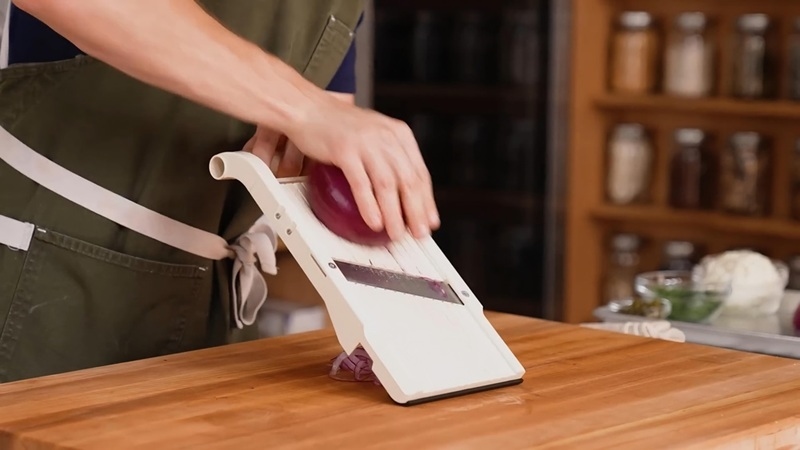
A good mandoline slicer can make a home cook feel oddly powerful. One minute there is a pile of potatoes, cucumbers, onions, or zucchini sitting on the counter. A few minutes later, everything is sliced thin and even, like someone suddenly became better with a knife overnight.
That is the nice part.
The not-so-nice part is that a mandoline blade is sharp in a very direct way. It does not care if someone is tired, rushing, distracted, or trying to slice the last tiny end of a carrot. That is where people get into trouble. Food & Wine warns that mandolines can be dangerous if users get careless, especially during slicing and cleaning.
Still, this tool does not need to feel scary. It just needs respect. Once a person learns the right setup, hand position, guard use, and cleaning habits, the mandoline becomes one of the quickest tools in the kitchen.
The first rule of how to use a mandoline slicer is simple: slow down before speeding up. That sounds backward, but it works. Set the tool on a stable surface first. If it has folding legs, lock them properly. If it is handheld, rest it over a bowl or cutting board so it does not slide around.
Next, choose the thickness setting before placing food on the blade. A thin slice works for chips, salads, onions, cucumbers, and gratins. A thicker slice is better for potatoes, carrots, apples, or vegetables that need to hold shape while cooking.
The food should be trimmed flat on one side when possible. A flat surface grips better and moves more evenly than a rolling, wobbly vegetable.
The most useful mandoline slicer safety tips are not complicated. They are just easy to ignore when someone feels confident. That is usually the dangerous moment.
Use the food holder. Use a cut-resistant glove if the food holder feels awkward. Stop before the food gets too small. Clean the blade carefully. Do not drop the slicer into a sink full of soapy water where someone may reach in blindly.
Knifewear’s safety guide gives the same practical warning: use the guard, consider a cut-resistant glove, and do not try to slice the final tiny piece just to avoid waste.
A safer setup usually includes:
That last one matters more than people think. Cleaning is when many small cuts happen.
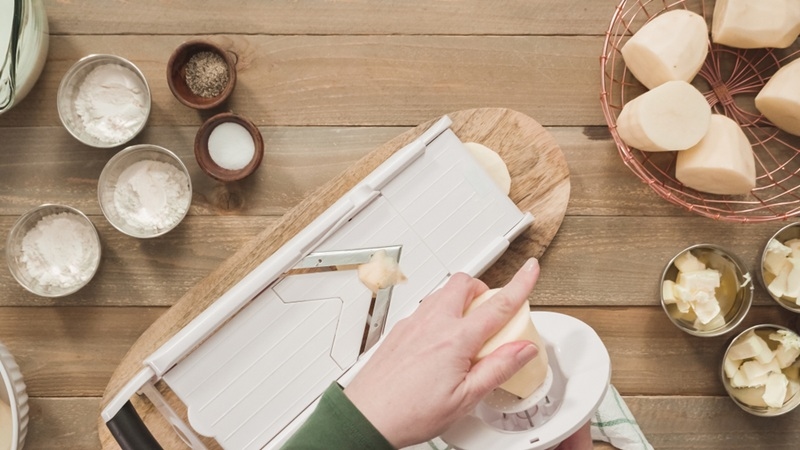
Most accidents happen because someone gets too comfortable. The slicer is working well. The slices look perfect. Then the person tries to finish the last inch of potato without the guard. Bad idea.
The biggest common mandoline slicer mistakes to avoid include pressing too hard, slicing too fast, skipping the guard, using wet hands, choosing the wrong thickness, and washing the blade carelessly.
Another mistake is using the wrong food. Very soft tomatoes, overripe fruit, or slippery vegetables can be difficult unless the blade is extremely sharp. A dull blade is not safer. It usually means more pressure, and more pressure means less control.
You May Also Like: Asian Chicken Recipe: Is This Apple Soy Glaze Worth the Hype?
A mandoline shines with firm produce. Potatoes, cucumbers, zucchini, carrots, onions, apples, fennel, cabbage, radishes, and sweet potatoes are all good candidates. It is especially useful when slices need to be the same thickness.
That matters for cooking. Thin potato slices cook evenly in a gratin. Same-sized cucumber slices look better in salads. Even onion slices soften more consistently in a pan.
This is where a mandoline slicer guide becomes useful for beginners. Start with easier foods like cucumbers or potatoes before trying tiny radishes or slippery onions.
Not every mandoline is built the same. Some are handheld and simple. Some stand on legs. Some have julienne blades, waffle cut options, or thickness dials. Some are safer for beginners because the blade is more enclosed.
Serious Eats tested 10 mandolines and named the OXO Good Grips V-Blade Mandoline as its best pick for most people, while also highlighting Benriner for serious cooks and Dash Safe Slice for safety-focused users.
For a beginner, safety and comfort should matter more than fancy attachments. If a slicer is annoying to set up, hard to clean, or scary to hold, it will sit in a drawer.
A mandoline slicer should be washed right after use, before food dries on the blade. But it should be washed carefully, not tossed into a sink. Rinse from the back of the blade when possible. Use a brush, not fingers, to remove stuck bits.
Dry it fully before storing. If the slicer has a blade cover, use it. If not, store it somewhere it will not catch a hand reaching into a drawer.
Must Read: Try This Deep Fried Shrimp Recipe for Restaurant Crunch
A mandoline can make food prep faster, cleaner, and more consistent. It is great for salads, chips, gratins, slaws, pickles, and thin vegetable cuts. But it is not a casual toy. The blade is sharp, and confidence can become a problem if safety habits slip.
The best mandoline slicer guide is really this: set it up properly, use the guard, wear a glove if needed, stop before the final tiny piece, and clean it with care.
Once those habits are in place, the tool becomes less intimidating and much more useful.
Yes, but only if beginners treat it seriously. A beginner should use the food guard every time, keep the slicer steady, and avoid slicing the last small piece by hand. It is also helpful to start with simple foods like cucumbers, potatoes or zucchini. A cut resistant glove is a smart extra layer, especially when you are learning.
It depends on the food. Thin settings work well for cucumbers, radishes, onions, and potato chips. Medium settings are better for gratins, apples, carrots, and zucchini. A beginner should test one slice first before rushing through the whole vegetable. That one test slice can save a lot of uneven cooking later.
Uneven slices usually happen when the food is not held flat, the pressure changes during slicing, or the blade is dull. Wet hands and slippery vegetables can also make the motion less steady. Trimming one side of the vegetable flat before slicing often helps. Slow, even pressure matters more than speed.
This content was created by AI